
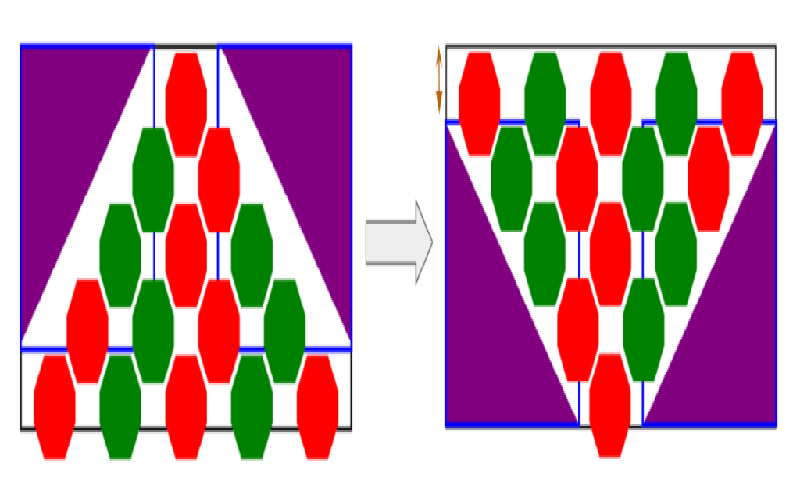
The responsive pyramidal grid marks a significant advancement in modern web design, showcasing innovative CSS layout techniques that enhance both aesthetics and functionality. By utilizing the principles of responsive web design, developers can now create intricate structures that seamlessly adapt to various screen sizes without the need for complex media queries. This method embraces a geometric approach rooted in hexagon grid design, allowing for visually striking arrangements that engage users. Additionally, the pyramidal grid exemplifies the effectiveness of modern CSS grid examples, pushing the boundaries of traditional layouts. The evolution from predecessors to this advanced technique underscores the dynamic nature of web development.
Introducing a new paradigm in web design, the adaptive pyramidal layout incorporates cutting-edge CSS technologies to engineer intricate structural designs. This innovative framework not only allows for fluid responsiveness but also transforms the conventional use of grid systems into a captivating visual experience. By leveraging modern CSS properties, designers can create eye-catching patterns that respond elegantly to varying device dimensions. Such adaptive systems, inspired by elements like the hexagonal grid, facilitate enhanced user interaction while adhering to the principles of responsive web design. Ultimately, this approach exemplifies the ongoing evolution of CSS layout techniques, wherein flexibility and creativity converge.
The Evolution of Responsive Grid Design
In the world of web design, creating responsive layouts has always been a significant challenge. Traditional methods often relied heavily on media queries to adjust the layout based on screen size, leading to complex CSS that was hard to maintain. However, the advent of modern CSS features has allowed developers to create dynamic grids that respond fluidly without the cumbersome use of media queries. This is particularly evident in techniques like the pyramidal grid, which leverages CSS Grid’s capabilities to ensure that elements reflow elegantly as the container size changes.
The transition from a standard hexagonal grid to a pyramidal one highlights this evolution perfectly. By focusing on the intrinsic properties of elements and defining grid structures in a more mathematical manner, designers can enhance the responsiveness of their layouts while avoiding redundant code. With modern CSS tools at our disposal, we can achieve complex layouts that adapt flawlessly to varying screen dimensions, making responsive design not only a necessity but also an exciting challenge for modern developers.
Understanding CSS Grid Basics
At the heart of creating flexible layouts lies an understanding of CSS Grid. Unlike its predecessor, Flexbox, which excels in one-dimensional layouts, CSS Grid empowers developers to control both dimensions simultaneously. This means that positioning elements in rows and columns becomes much more intuitive. For instance, by defining rows and columns explicitly, you can maintain precise control over the placement of elements without resorting to complicated calculations or adjustments.
In our example, we define grid columns using the `repeat(auto-fit, var(–s) var(–s))` approach, which efficiently adjusts the layout based on available space. This method ensures that the layout remains responsive while using a specified size for each grid item. Moreover, setting margins and the aspects of shapes like hexagons becomes straightforward, removing the complexity once associated with responsive layouts.
Harnessing Modern CSS Features
Utilizing features such as `corner-shape` and `sibling-index()` can significantly enhance grid layouts. These properties allow for unique shapes and seamless placement of elements while keeping CSS clean and manageable. Unlike older methods, where hacks were often employed to achieve a specific design, modern CSS enables a more straightforward implementation. Functions like `sibling-index()` simplify the process of determining the position of elements within the grid, allowing developers to apply styles conditionally based on their placement.
Additionally, properties like `aspect-ratio` ensure that items maintain their shape regardless of screen size, which is crucial when designing grids featuring uneven shapes such as hexagons and pyramids. Such versatility means that designers can focus on creativity rather than being bogged down by the limitations of older methodologies.
Creating the Pyramidal Structure
To construct a pyramidal grid, we start with the fundamental configuration using CSS Grid. The core idea is to place elements based on mathematical relationships rather than arbitrary positions. By calculating the position of each item and utilizing the `:nth-child()` selector, we can define the placement logically. This allows the grid to grow organically as more items are added, following a predetermined pattern that creates a visually appealing layout.
For instance, by identifying the first item of each row and positioning it relative to the container’s width, developers can ensure that the grid remains balanced. This method not only simplifies the implementation but also enhances the grid’s adaptability across various screen sizes. Each item’s column start is mathematically linked to its position, ensuring that every addition harmoniously integrates into the layout, resulting in a cohesive design.
Responsive Behavior in Grid Layouts
One of the standout features of modern CSS grids is their responsive behavior. Rather than switching between different styles for various screen sizes, the pyramidal grid maintains its shape and functionality by adjusting the layout dynamically based on available space. This is achieved by continuing the pyramidal structure up to a specific point, after which it seamlessly transitions into a classic grid layout.
This transition is handled with precision, ensuring that items reshape and realign according to the principles of responsive design. By examining item indices and determining when certain elements become the first of a new row, the grid can fluidly adapt without losing its structural integrity. This innovative approach results in a design that not only looks appealing but also functions effectively, regardless of how many items are present or the dimensions of the viewing area.
Conclusion: The Future of CSS Layouts
In conclusion, the evolution of CSS has brought about a paradigm shift in how we approach layout design. The shift towards a more mathematical and logical methodology for structuring elements allows for the creation of complex grids with ease. By embracing modern features, developers can create dynamic layouts that respond intelligently to their environments.
As browsers continue to support and introduce new CSS capabilities, the potential for innovative designs will only expand. The pyramidal grid serves as a testament to this evolution, showcasing how far CSS has come and the exciting possibilities that lie ahead for web designers and developers. The future is bright, and with each new feature, we can push the boundaries of what we can achieve with web design.


In summary, the modern CSS techniques utilized to create a responsive pyramidal grid represent a significant leap forward in web design, particularly in terms of flexibility and adaptability without relying on media queries. These methods underscore the power of CSS Grid and the recent features that enhance our ability to build complex layouts effortlessly. Key takeaways include:
– **Dynamic Layouts**: The use of CSS Grid allows for the design of a pyramidal layout that adjusts seamlessly with different viewport sizes, ensuring a cohesive experience across devices.
– **Innovative CSS Features**: Leveraging properties such as `corner-shape` and `sibling-index()` has streamlined the process, showcasing the evolution of CSS into a more functional programming-like paradigm.
– **Less Code Complexity**: The implementation requires far fewer lines of code compared to older methods, emphasizing maintainability and readability in CSS.
Ultimately, this exploration into responsive pyramidal grids highlights not only the advancements in CSS but also the urgency for developers to adapt and embrace these changes. With ongoing updates and the introduction of new capabilities, the way we approach web design is continually transforming. Consider the following points:
– **Future Forward**: As CSS continues to evolve, developers must stay updated with new features and methodologies to enhance their designs.
– **Community Collaboration**: Sharing knowledge through articles and examples, like this one, fosters a community where innovation thrives, encouraging developers to experiment and share results.
– **Broader Applications**: The techniques highlighted here can cross over into various design elements beyond just pyramidal and hexagon grids, providing a foundation for creative layouts and enhanced user experiences.