
Creating a CSS pie chart is a compelling way to visualize data purely through stylesheets, illustrating the power of CSS graphics without leaning on JavaScript. In this tutorial, we delve into the essentials of building semantic CSS charts that not only represent statistics visually but are also accessible, ensuring that screen readers can interpret them effectively. By exploring techniques for creating pie charts with CSS, developers can save time and enhance user experience while maintaining a clean codebase. Accessibility in pie charts is critical, and we’ll touch on best practices to ensure all users can benefit from the data presented. This article will guide you step-by-step through the process, enriching your knowledge of digital design with practical examples and SEO-enhanced tips.
Visualizing data can take many forms, but using CSS to create a pie chart offers a unique blend of aesthetics and function. This article serves as your comprehensive guide to mastering pie chart creation using only CSS, ensuring your graphics are not only attractive but also meaningful. We’ll explore various techniques that allow for elegant and responsive displays, addressing the challenges of accessibility and semantic structure. Expect to learn about best practices while minimizing JavaScript use, providing a straightforward approach to integrating charts seamlessly into your web design. Join us as we uncover the innovative strategies behind crafting effective and engaging pie charts with CSS.

Exploring the Essence of CSS Pie Charts
The beauty of creating pie charts using CSS lies not only in the simplicity of styling but also in the semantic structure it brings to web applications. As Juan Diego Rodríguez pointed out, a truly effective pie chart should be both visually appealing and accessible. Accessibility is paramount; a screen reader needs to accurately convey the data depicted in the chart. The approach outlined in Juan’s article brilliantly merges these aspects by leveraging HTML for structure while using CSS for presentation.
Delving deeper into the implementation, one finds that conventional wisdom often dictates that JavaScript is needed to create interactive chart elements. However, this doesn’t have to be the case. By employing creative CSS techniques, we can create a fully functional pie chart, relying mostly on CSS properties and attributes to manage the chart’s state. The semantic HTML markup retains not only its readability but also facilitates customization—crucial for developers aiming for versatility.
Overcoming JavaScript Dependencies
The primary challenge when developing a CSS-only pie chart revolves around managing the state of individual slices in the absence of JavaScript. As mentioned earlier, a child element in CSS has no knowledge of its siblings, which means that implementing a pie chart solely with CSS appears daunting. However, after substantial experimentation, it was found that creative use of parent elements to hold data attributes can circumvent this limitation. This method of indexing percentage values directly into the parent `ul` element allows CSS to access necessary calculations without breaking the ‘no JavaScript’ rule.
Consequently, one can comprehend the numerical relationship of each slice to the others through CSS custom properties. This results in a clean, elegant solution where the parent element not only holds color values but also defines the structure of the pie chart. By manipulating the accumulative nature of the slices, pie charts can be rendered seamlessly while adhering to accessibility standards, showcasing the potential of CSS when combined with clever structural markup.
Yet, this approach is not without its drawbacks. The reliance on CSS custom properties might create a barrier for developers who are not well-versed in advanced CSS techniques. While the initial implementation may seem straightforward, scaling it for extensive datasets might introduce complications. However, it’s crucial to recognize that pie charts are inherently NOT the optimal choice for displaying large amounts of data; hence it’s a trade-off that addresses specific use cases rather than a blanket solution.
CSS Innovations and Future Prospects
As we look towards the future of CSS, the advent of new features such as `sibling-index()` and `sibling-count()` promises to redefine what’s possible within the realms of styling. These features could potentially simplify the implementation of complex charts dramatically. Currently, workarounds such as managing accumulations through cascading styles require repetitive code, yet they also foster a deeper understanding of CSS’s cascading nature. Visually, the outcome is a colorful array of pie slices, each uniquely representing segments of data while remaining functionally sound.
Moreover, the discussion of integrating additional chart types beyond pie charts introduces an exciting dimension to this exploration of CSS. As shown in code implementations, transitions to bar charts and other visual representations provide a pathway to richer data storytelling without the invasive reliance on JavaScript. The journey through CSS-only chart creation leads to a broader conversation about creating web components that align with the principles of progressive enhancement. Ultimately, the essence of CSS pie charts lies not just in their visual appeal but also in their ability to communicate data effectively and accessibly in the web ecosystem.
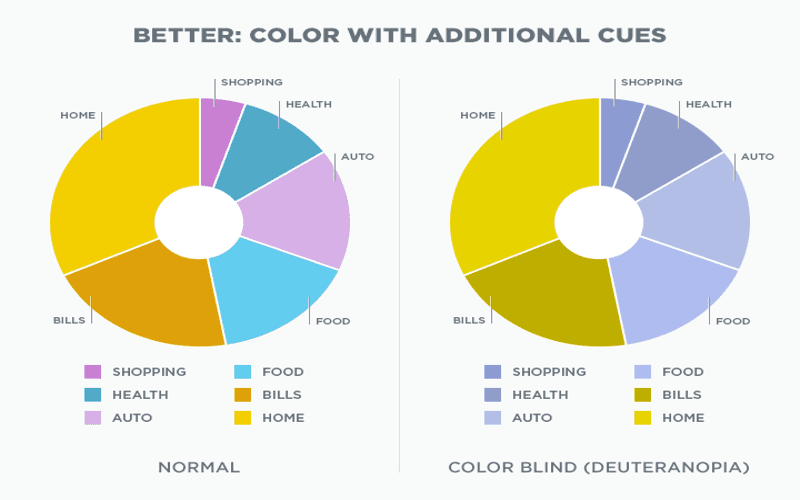
In conclusion, Juan Diego Rodríguez’s article presents a fascinating exploration into creating a perfect CSS pie chart without the need for JavaScript, effectively emphasizing semantic accessibility and customization. The approach discussed in the article offers a variety of takeaways, including:
– **Semantic Structure:** The use of HTML to provide clear and accessible content for screen readers, enabling better interpretation of data.
– **HTML Customizability:** The design enables users to easily modify the pie chart simply by adjusting the HTML markup, thus prioritizing ease of use and flexibility.
– **Minimal JavaScript Usage:** The focus on achieving functionality with minimal reliance on JavaScript enhances the experience, highlighting CSS’s potential in data visualization.
– **Creative CSS Techniques:** The innovative method of moving percentage values to the parent element to avoid JavaScript demonstrates resourcefulness and adaptability in CSS styling.
– **Accessibility Enhancements:** The implementation of `counter-reset` and CSS properties ensures that the pie chart remains accessible while allowing for visually appealing designs.
Ultimately, this exploration highlights the future potential of CSS in creating dynamic and accessible data visualizations that minimize JavaScript dependency.