
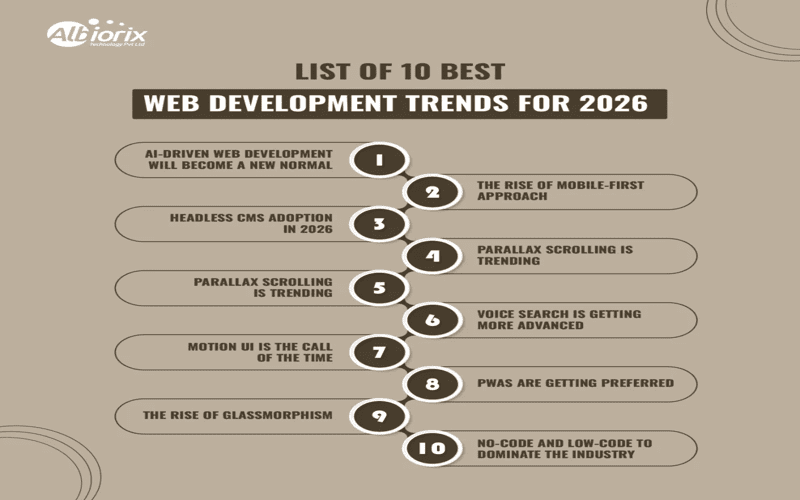
As we look ahead to web development trends 2026, it’s clear that the industry is on the cusp of groundbreaking changes that every developer and designer must be prepared for. With the inevitable rise of AI coding tools 2026, the ability to streamline coding processes and enhance productivity will become crucial. Additionally, innovations like React Server Components and the burgeoning benefits of headless CMS options are redefining how we approach web architecture and content management. CSS container queries now allow for more adaptable and responsive designs, revolutionizing user experiences across devices. Embracing these trends is not just advantageous—it is essential for anyone looking to stay relevant in the fast-evolving landscape of web development in 2026.
In the world of digital construction, the upcoming trends for web design and development in 2026 are reshaping the way websites are built and maintained. With the advent of advanced coding assistants powered by artificial intelligence and a shift towards more modular, component-based architectures like React Server Components, the development process is poised for a significant transformation. Furthermore, the implementation of headless CMS solutions is streamlining content management, allowing developers to better segregate content from its presentation layer, thus enhancing flexibility. Innovations such as CSS container queries are enabling more fluid and context-aware designs, pushing the boundaries of responsiveness. Designers and developers alike must adapt to these pivotal changes to cultivate more efficient workflows and deliver richer user experiences.

AI-Assisted Coding: Embrace or Fall Behind
In today’s fast-paced web development environment, AI-assisted coding tools such as GitHub Copilot and Cursor have evolved from being mere novelties to fundamental parts of a developer’s toolkit. These tools are designed to enhance productivity by allowing developers to generate boilerplate code, refactor logic, or even debug issues with a simple prompt. Moreover, the 2025 Octoverse report highlighted that over 70% of developers in surveyed firms use AI tools, suggesting a clear shift towards leveraging AI for everyday programming tasks.
This increasing reliance on AI coding assistants raises an important question: will developers become obsolete? On the contrary, embracing these tools can significantly amplify a developer’s efficiency, permitting them to achieve more in less time. Resistance to adopting AI tools could lead to a stark decline in productivity, making it imperative for developers, designers, and team leads to invest time in mastering these AI technologies.
Edge Computing: The Future of Web Deployment
Edge computing stands as one of the most transformative trends in web development for 2026. By running code nearer to users at the network edge rather than relying on centralized data centers, developers can achieve faster response times and reduced latency. Consider the difference in loading a website where server-side logic is processed in real-time just a few milliseconds from the user, as opposed to thousands of miles away.
This shift is not just about speed; it also directly impacts conversion rates for content-heavy sites. For instance, imagine a marketing site that dynamically loads personalized content—latency can be the determining factor between a user bouncing or making a purchase. Therefore, developers should not only familiarize themselves with edge deployment strategies but actively implement them in their projects to ensure a competitive edge.
Transforming Frontend Architectures with React Server Components
React Server Components are fundamentally changing how frontend architecture is structured by allowing developers to render components on the server. This functionality promises a leaner client-side bundle, devoid of unnecessary JavaScript. The implications of this are profound; developers can streamline their applications to improve performance while simplifying the client/server architecture.
Yet, the adoption of React Server Components isn’t merely about performance; it’s about redefining user experience. By shifting heavy data-fetching tasks to the server, developers can provide users with nearly instantaneous interactions, a critical factor in today’s fast-paced digital landscape. As such, embracing this trend can offer businesses a tangible competitive advantage in keeping user engagement high.
Web Components: A Solution for Future-Proof Design Systems
Web Components represent a significant leap towards creating reusable design elements that can be employed across various frameworks and platforms. This trend stands out in an age where maintaining multiple versions of UI components across different frontend technologies becomes increasingly cumbersome.
The beauty of Web Components lies in their framework-agnostic nature, enabling teams to build once and deploy everywhere. This not only alleviates the overhead of keeping multiple codebases aligned but also streamlines the development process. Therefore, adopting Web Components is not merely a trend but a strategic move towards enhancing efficiency and future-proofing design systems.
Container Queries: Revolutionizing Responsive Design
Gone are the days when developers relied solely on media queries to craft responsive designs. Container queries represent a dramatic pivot in how we approach layout adjustments, allowing styles to adapt based on the size of the parent container rather than the viewport. This shift enables a more intuitive and context-aware approach to responsive design.
Given the increasing variety of devices and screen sizes, container queries offer a streamlined solution to one of design’s most persistent challenges—creating truly adaptable interfaces. Implementing container queries allows developers to eliminate complex workarounds that media queries necessitated, making responsive design simpler and more effective.
The Transition to TypeScript: A New Standard
In 2026, TypeScript is no longer a choice for JavaScript developers—it’s an expectation. The programming landscape now demands strong typing to mitigate bugs and improve maintainability in large codebases. With tools and IDE support keeping pace, TypeScript enables developers to write cleaner, more robust code.

As organizations prioritize code quality and maintainability, the question has shifted from whether to use TypeScript to how strict our TypeScript configurations should be. Adopting TypeScript, particularly with strict mode, can dramatically enhance a team’s productivity and code clarity, making it an essential skill for any modern web developer.


In conclusion, the web development trends of 2026 present a multitude of opportunities for designers and developers to enhance their workflows and outcomes. By embracing these trends, developers can not only remain competitive but also lead the charge in creating more efficient, responsive, and accessible web experiences. As the landscape continuously evolves, adapting these strategies is essential for success. Here are key takeaways to keep in mind:
- Adopt AI-assisted coding tools to boost your productivity and efficiency.
- Integrate TypeScript into your projects for better maintainability and reliability.
- Focus on accessibility-first development to ensure compliance and improve user experience.
- Utilize Edge Computing and React Server Components for optimized performance and reduced latency.
- Leverage Web Components and container queries to create scalable design systems.