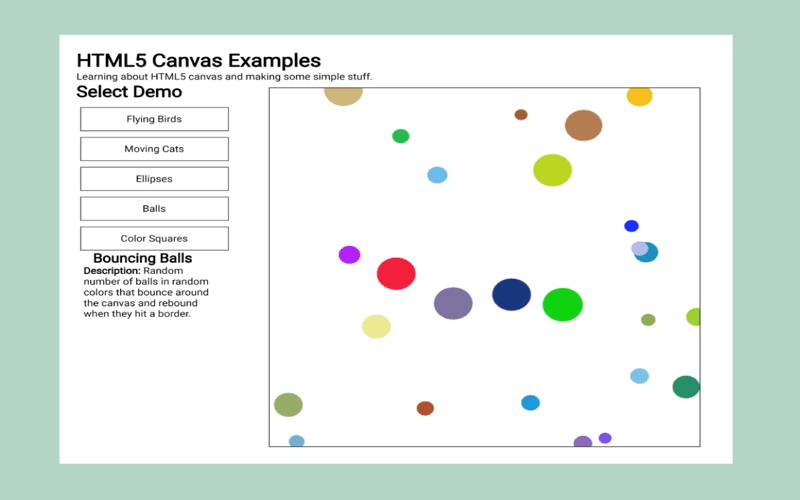
HTML-in-Canvas is revolutionizing how developers interact with visual content by allowing the integration of semantic HTML directly within a “, creating an exciting canvas of possibilities. This innovative API is perfect for projects involving hex maps or even optimizing E-ink displays for better aesthetic and user experience. With web-based operating systems tailored for e-ink devices becoming more popular, features like HTML-in-Canvas could greatly enhance interactions with responsive images and graphical data. Additionally, developers are embracing CSS tricks that push the boundaries of traditional coding practices, ultimately leading to more dynamic web experiences. As we explore this fascinating topic, stay tuned for insights into how HTML-in-Canvas can elevate your projects to new heights!
Diving into the realm of HTML-in-Canvas unveils a myriad of innovative techniques for crafting interactive visuals on the web. This technology allows for embedding true HTML elements within a drawing surface, pairing beautifully with hexagonal mapping and analytics tools. Moreover, as we explore web-based systems for e-ink devices, the potential for improved engagement and artistic expression becomes evident. Such advancements are crucial for handling responsive imagery while employing captivating CSS methodologies that resonate with modern design trends. Join us as we discuss the implications and creative opportunities afforded by HTML-in-Canvas in the evolving landscape of web development.

HTML-in-Canvas Experiments
It’s truly exhilarating how HTML-in-Canvas is being embraced this year! Developers are venturing into uncharted territories, utilizing this API to bring semantic HTML to life within a “. With visual effects enhancing user experience, it’s a game changer. For instance, as highlighted by Amit Sheen, when experimenting with `chrome://flags/#canvas-draw-element`, we realize how worthwhile it is to consider these innovations in our future projects.
The implications are extensive. We’re seeing the potential for more interactive graphics and richer interfaces, blending the boundary between standard HTML and canvas elements. Imagine applications that can dynamically change, adapt to user inputs, or even display data visualizations in a way that feels organic and fluid.
Speaking of creativity, this technology gives developers a playground for experimenting beyond traditional boundaries. It’s not just about displaying data; it’s about creating experiences that resonate. As we think of possibilities, one can’t help but wonder how such innovations might affect accessibility and performance in web applications.
Building a Hexagonal World Map-Analytics Feature
Ben Schwarz has sparked an intriguing conversation regarding map analytics and design constraints. The concept of a hexagonal world map intrigues many, providing a visually engaging way to display data. Hex maps are not only aesthetically pleasing but are efficient at representing geographical areas more uniformly compared to traditional square layouts. This ensures better spatial understanding of complex data sets, which is crucial for analytics.

Moreover, the engineering challenges posed by these features push developers to think outside the box. From SVG to CSS, the combination of different technologies is essential in this journey. As we dive deeper into the mechanics of analytics, it’s imperative to consider the balance between artistry and function—design should not hinder usability but rather enhance it.
Rekindle — A Web-based OS for E-ink Devices
Rekindle stands out as a fascinating project aimed at redefining interaction with e-ink devices. While it isn’t merely a tutorial, it highlights a crucial area of development. E-ink technology has been stagnant due to the low-powered browsers traditionally used. However, with the emergence of media queries tailored for e-ink devices, we find ourselves at a crossroads. Are we witnessing the future of e-ink as a viable display technology?
Many are curious to see whether e-ink optimization will capture the interest of developers. Given that both web browsers and media queries are still in evolution, one can only speculate on future potential. The notion is to inspire more developers to give e-ink their attention, possibly sparking a wave of innovations and tools specifically crafted for these unique devices.

In conclusion, the latest advancements in web technologies have opened new avenues for developers to enhance user experiences dramatically. The exploration of HTML-in-Canvas, hexagonal analytics features, and the potential of e-ink optimizations mark significant steps forward in how we engage with online content. As we continue to experiment with these innovative tools, the following points highlight key insights from What’s !important #10:
- HTML-in-Canvas allows for dynamic rendering of semantic HTML elements within a , pushing the boundaries of visual web design.
- Hexagonal world maps provide unique analytics capabilities, fostering creativity in presenting data.
- Rekindle aims to improve e-ink experiences, although the evolution of media queries has yet to be fully realized in current browser technologies.
This blend of creativity and technical exploration is imperative as we strive for more responsive and engaging web applications.
Looking ahead, the ongoing developments in CSS and HTML also hold promising potential for future projects. Utilizing the ‘content’ property for images and implementing responsive techniques can revolutionize how websites handle media. The emphasis on new web platform features signals exciting opportunities for developers. Key takeaways include:
- The use of the ‘content’ property for images allows for easier manipulation and responsive design strategies.
- New features like ‘light-dark()’, ‘color-mix()’, and ‘advanced attr()’ functions encourage experimentation and innovation in web design.
- Maintaining awareness of browser support is essential to harness these features effectively.
Incorporating these ideas and tools will undoubtedly shape the future of web development, fostering richer interactions and improved accessibility.