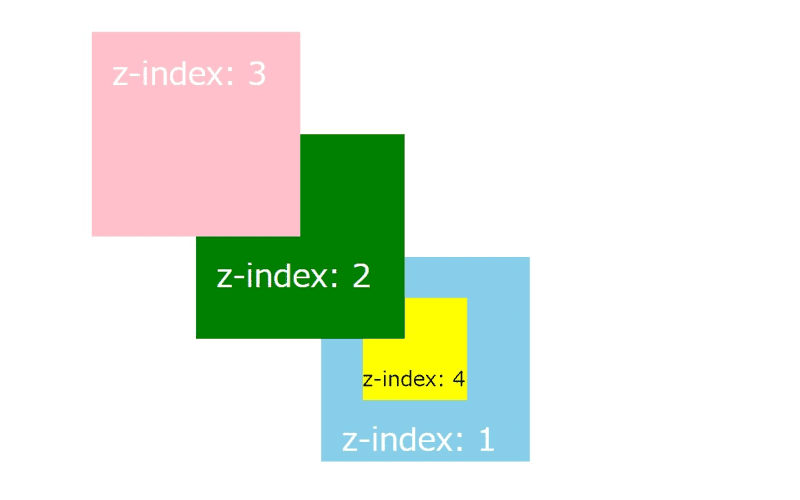
Managing the `z-index` is a crucial aspect of web design, particularly for UI developers aiming for a seamless user experience. By leveraging `z-index` effectively, you can control the stacking order of various elements such as modals, dropdowns, and tooltips, ensuring they display correctly above other content. However, without proper z-index management, many teams drift into chaos, resulting in a mishmash of arbitrary values—the infamous “magic numbers.” To navigate these challenges, understanding `z-index best practices` becomes essential, especially in larger projects where maintaining a clear CSS stacking order is paramount. Learning how to use `z-index` and incorporating `z-index tokens` into your CSS design systems can significantly enhance your project’s coherence and maintainability.
When discussing the intricacies of overlapping elements in web design, many developers encounter the term **layer management**. This concept encompasses the control of element visibility through various techniques, notably the `z-index` property in CSS, which dictates how components stack on one another. As demand for dynamic interfaces grows, mastering effective **layering strategies** becomes imperative for creating engaging user experiences. A well-organized system of **positioning values** allows teams to avoid the pitfalls of common pitfalls associated with random layering decisions. By embracing structured approaches, designers can lay the groundwork for efficient, conflict-free interface hierarchies.

Understanding the Chaos of `z-index` Values
The `z-index` property is deemed essential for managing the stacking order of webpage elements, yet its implementation often spirals into chaos. Developers frequently resort to random high values like ‘10001,’ which seem to solve immediate problems but actually introduce a host of new ones. This reliance on magic numbers undermines the maintainability of projects, leading to a tangled web where overlapping values become a source of conflict among teams.
Imagine a scenario: Team A deploys a modal with a `z-index` of ‘1000’, while Team B introduces a toast at ‘2000’. Subsequently, Team C might decide their popup should exceed all others, asserting it with a `z-index` of ‘10001’. This competitive spirit, rather than collaboration, breeds confusion, as developers are left guessing the ramifications of their assigned values. Ultimately, each high `z-index` becomes a solitary effort without a cohesive framework, initiating chaos.
The Importance of Tokenization in `z-index` Systems
To remedy the chaotic landscape of `z-index`, the concept of tokenization stands out as a beacon of clarity. By employing a well-structured system of defined tokens, developers can achieve a sustainable way to manage stacking without descending into the abyss of arbitrary numbers. For instance, instead of using `z-index: 10001`, one might redefine their stacks with tokens like `–z-base`, `–z-toast`, and `–z-popup`, presenting a clearer relationship between elements.
Such a systematic approach simplifies maintenance; if you ever need to add a new component, you can easily tweak the values from a central location without rifling through countless files. Adjusting the stacking order doesn’t become a Herculean task — it’s as easy as swapping values. This logic minimizes confusion and streamlines collaboration among teams, ensuring reliability across different project segments.
Moreover, employing these tokens enhances debugging capabilities. You can directly pinpoint which layer is causing an issue, allowing for quick resolutions without unraveling complex interactions. The adoption of tokens fosters a culture where every developer understands the significance of their `z-index` choices, promoting a concerted effort towards crafting a coherent design system.
Simplifying Local Contexts: A New Perspective on `z-index` Value
Beyond establishing global stacking orders, developers also face the challenge of managing internal layers within components. This is where local tokens come into play, providing a method to navigate the intricacies of component-based structures devoid of confusion. Values such as `–z-top` and `–z-bottom` can be used as anchors to ensure elements within a modal or popup interact correctly without overwhelming global states.
Consider a button in a popup; if it requires a higher stacking context relative to a decorative icon, local tokens make it effortless to achieve this without clashing with broader definitions. A simple adjustment using `calc()` can articulate these relationships effectively, allowing for fluid designs that are both practical and aesthetically pleasing. Negative values too can find their place within local contexts, allowing developers greater flexibility in positioning elements without risking overlap issues.
Ultimately, adopting this perspective of separating global and local contexts resolves many of the complexities associated with `z-index` handling. Developers can maintain precise control over elements, infusing logic into design decisions. By systematically instilling these methods, the discipline of narrative in design flourishes, radically clarifying how we view each layer’s purpose within the overarching architecture of our applications.

In conclusion, managing `z-index` effectively is vital for any UI developer aiming to maintain a clear and organized stacking order on their web projects. Here’s a summary of the key takeaways:
– **Avoid Magic Numbers:** Steer clear of arbitrary numbers that lack context, as these often lead to confusion and bugs.
– **Embrace Tokenization:** Establish and use a centralized system of `z-index` tokens to ensure consistency and clarity across your codebase.
– **Understand Stacking Context:** Recognize that the stacking context may override the `z-index`, and understand the hierarchy to resolve display issues correctly.
– **Promote Layering Thinking:** Shift your mentality from aiming for a high `z-index` to understanding which layer each element belongs to.
– **Utilize Calc for Relations:** Employ the `calc()` function to precisely manage relationships between layers instead of assigning unrelated values.
– **Establish Internal Contexts:** Use local tokens specifically for internal components to handle complex stacking scenarios effectively.
By adopting these guidelines, developers can transform the inherently chaotic nature of `z-index` management into a more systematic and predictable process. The implementation of tools, such as the `z-index-token-enforcer`, will further solidify this system and assist in maintaining adherence to best practices:
– **Automate Compliance:** Utilize specialized libraries to enforce the usage of tokens and prevent the emergence of magic numbers.
– **Integrate with Development Tools:** Leverage plugins for popular style linting tools to catch misuses before they become embedded in the code.
– **Maintain a Clean Codebase:** Regularly scan your project to ensure adherence to the established `z-index` system, ultimately improving maintainability and collaboration among multiple teams.
Through these practices, the `z-index` property can be wielded effectively, enabling developers to focus on building impressive interfaces without the fear of hidden elements and unexpected stacking issues.